Slipped & Herniated Disc Treatment Options
Slipped discs, sometimes referred to as herniated or prolapsed discs, occur when the soft cushion of tissue (nucleus pulposus) in discs between the vertebrae of your spine pushes out, causing the disc (or disc fragments) to move from its natural position.
Symptoms such as acute sciatica and lumbar back pain are present when the disc or disc fragments push on spinal nerves or cause inflammation.
Symptoms resolve naturally for the majority of patients. However, approximately 10% of patients require surgical intervention as symptoms become acute and cannot be managed by medication or physical therapies.
What Treatments are Available for Slipped/Herniated Discs?
Steroid injections
Steroid injections generally provide temporary relief of symptoms by treating inflammation around the site of slipped or herniated discs which often returns.
Discectomy
A discectomy involves removing fragments of a degenerated disc which are pressing on spinal nerves.
Whilst minimally invasive, discectomy only provides temporary relief as further disc degeneration typically occurs, allowing fresh disc fragments to push on spinal nerves or cause inflammation.
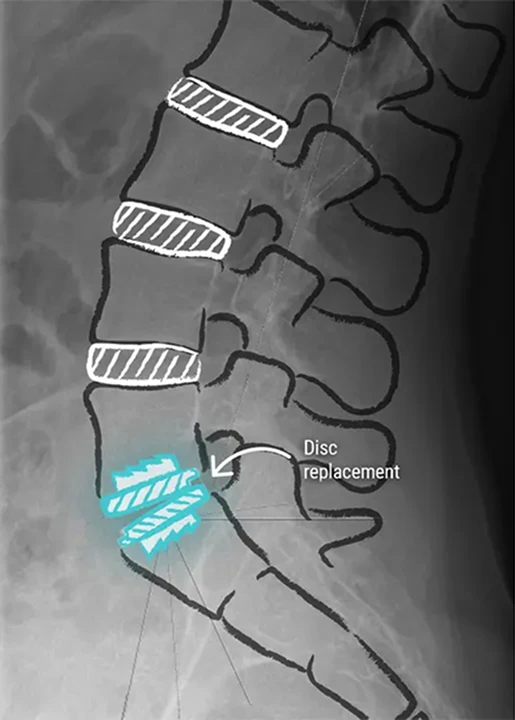
Patients often undergo repeat discectomies as, unlike Prodisc® L total lumbar disc replacement, the procedure does not treat the root cause of symptoms.
Spinal Fusion
Spinal fusion is a procedure which fuses vertebrae together using titanium screws and rods, allowing the diseased natural disc to be removed.
The procedure carries significant risk as it is undertaken through the back in proximity to the spinal cord. Permanent nerve damage can occur and spinal mobility is permanently impaired.
Adjacent discs are placed under greater stress which often causes future issues.
The procedure affects back muscles which can prolong recovery time and increase the risk of complications. Returning to strenuous activities and sports is not certain.