Skip to content
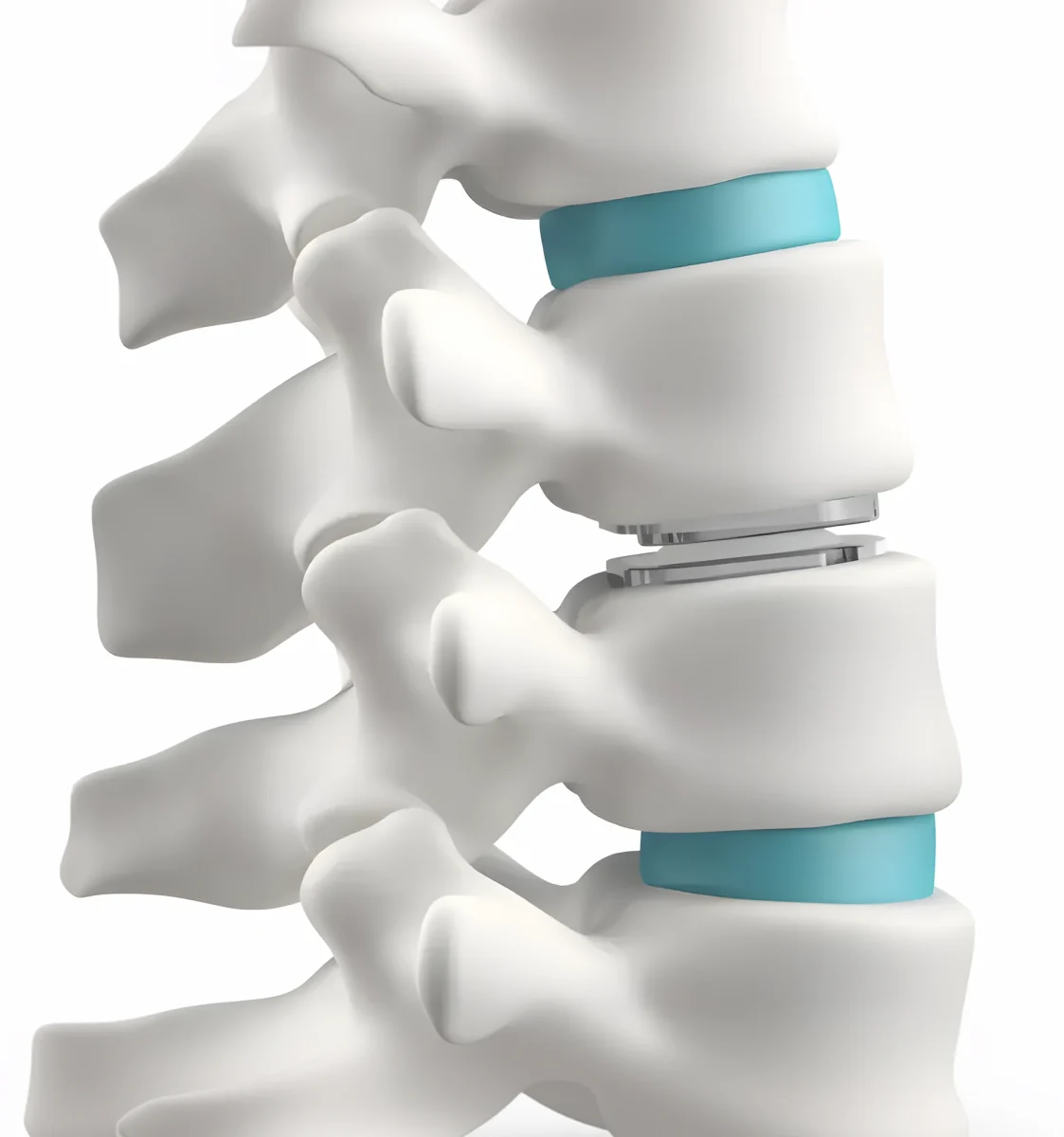
3d render showing a Prodisc® L lumbar total disc replacement in place between two vertebrae in the lumbar spine

Prodisc® L Total Lumbar Disc Replacement

Total lumbar disc replacement treats severe lower back pain and chronic sciatica caused by a herniated or degenerated disc by removing the damaged disc and replacing it with an artificial one. Unlike spinal fusion, total lumbar disc replacement restores natural mobility rather than permanently immobilising it.

  • Treats the root cause of your pain to permanently relieve symptoms in a single procedure
  • Restores spinal mobility, allowing a full return to strenuous activities and sports
  • Treatment is typically available within 8 weeks for suitable candidates, subject to a successful surgical assessment
  • 91.8% of CCV patients would have the surgery again
  • CCV Montpellier is the global gold standard for the procedure, undertaking more than 800 Prodisc® L procedures every year, considerably more than any other clinic.

SpinePro is the exclusive international partner of CCV Montpellier, the pioneering French clinic where the Prodisc® L was invented. SpinePro arranges everything from your initial MRI review to your medically supervised recovery at home.

Total lumbar disc replacement is also known as lumbar total disc replacement (LTDR), lumbar disc arthroplasty, or lumbar artificial disc replacement (LADR).

Who Is a Candidate?

Disc replacement may be right for you if:

  • You have severe lower back pain, with or without chronic sciatica
  • Conservative treatment and medication no longer provide lasting relief
  • Your MRI shows one or more severely herniated discs or degenerative disc disease in your lumbar spine
  • You want to stay active and restore spinal mobility

Already had a discectomy? You may still be a candidate. CCV’s published data shows patients with prior disc surgery achieve equivalent long-term outcomes to those having disc replacement as their first procedure.[2]

Find Out If Prodisc® L Total Lumbar Disc Replacement Is Right for You

If you have a recent lumbar MRI, our surgeons can review your case and advise whether you’re a candidate for treatment, at no cost. Treatment is typically available within 8 weeks for suitable candidates, subject to a successful surgical assessment.

Surgical Assessment

What to Expect

The procedure is minimally invasive, performed through a small abdominal incision.

5 to 8 cm

Incision size

45 min

Total surgery duration

3 days

Average hospital stay

5 days

Hotel stay in Montpellier

9 days

Return home to the UK

2 weeks

Minimum time off work

3 weeks

Resume driving

8 weeks

Average recovery time

12 weeks

Resume light exercise

6 to 12 months

Full competitive sports

* These are average times, with possibility of variation from one patient to another.

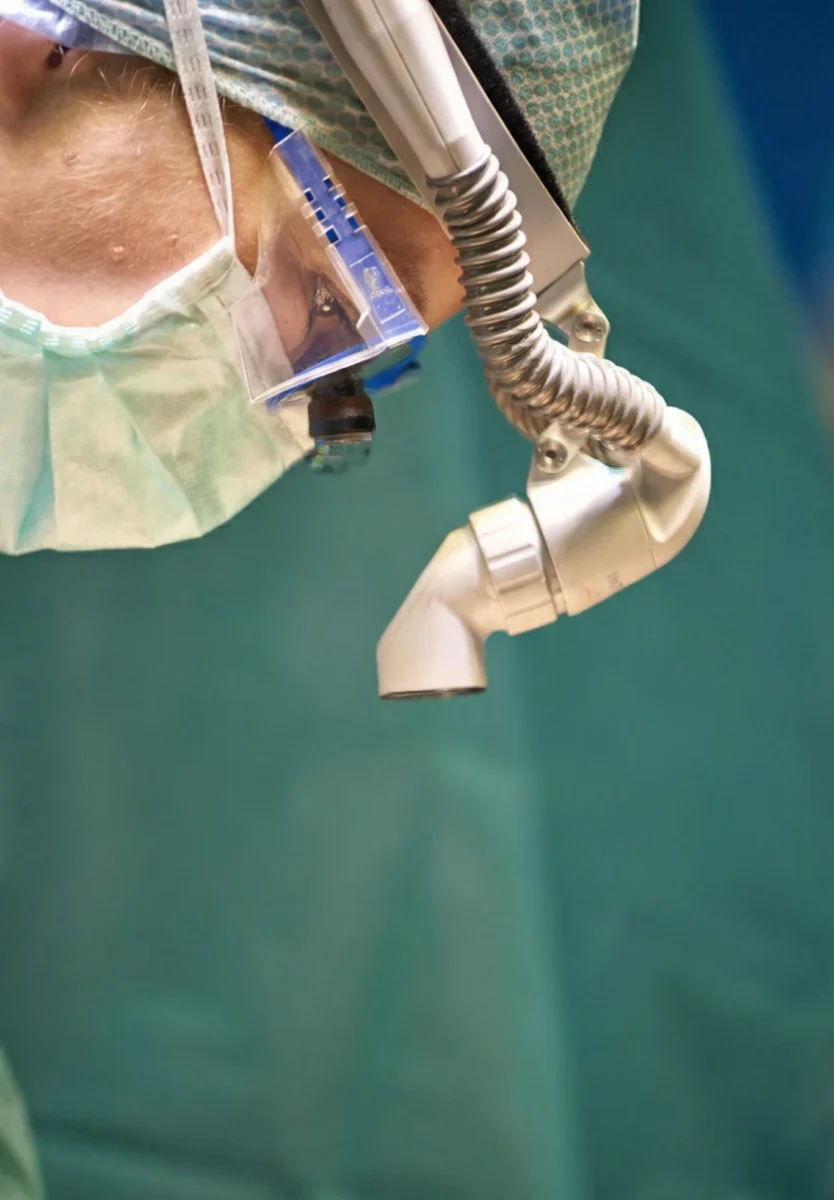
Close up of a surgeon operating on a disc replacement surgery, showing the surgeon's head looking down

The Procedure

The procedure is performed under general anaesthesia. Through a small incision in the abdomen (5-8 cm), the surgeon accesses the spine without going through the back, avoiding spinal nerves entirely.

The degenerated natural disc is removed and replaced with the Prodisc® L implant. The only tissue cut is the outer abdominal muscle layer, which is sutured closed at the end. The procedure is minimally invasive, resulting in a swift recovery and fast return to work.

Why Operate Through the Abdomen?

The disc is in the front part of the spine, while the nerves run through the spinal canal at the back of the spine. By accessing the disc from the front, the Prodisc® L implant can be safely placed without disturbing spinal nerves.

Because of this, there is minimal risk of nerve damage such as permanent numbness, tingling, or burning resulting from the procedure.

Recurrent Herniated Discs/Discectomies

It is important to understand that the purpose of a discectomy is to relieve the compression of the nerve by a disc fragment, but it does not treat the disc disease responsible for the herniation which will continue to progress with worsening symptoms.

Prodisc® L total lumbar disc replacement treats the diseased disc and the herniation in a single operation by totally replacing the degenerated disc, eliminating the need for repeat discectomies or other procedures.

35 Years of Evidence

The Prodisc® L has been implanted over 225,000 times worldwide and is the most extensively studied lumbar disc replacement available. It was developed at CCV Montpellier by Dr Thierry Marnay, who performed the first procedure in 1990. SpinePro exists to connect patients with this team, and here’s what they’ve achieved:
91.8%

Would have surgery again

8.6/10

Patient satisfaction

0.67%

Lowest published revision rate

35+ years

Since first procedure

A revision rate of 0.67% means fewer than 1 in 150 patients required further surgery, even after two decades. These figures come from a 2024 study tracking 1,187 CCV patients for up to 21 years – the largest and longest single-centre follow-up ever published for total lumbar disc replacement.[2]

The History of Prodisc® L

From Dr Thierry Marnay’s very first patients to global success

Patients implanted with the Prodisc® L in 1990 are still being monitored at the CCV Montpellier, making it the most experienced centre in the world for Prodisc® L total lumbar disc replacement surgery.

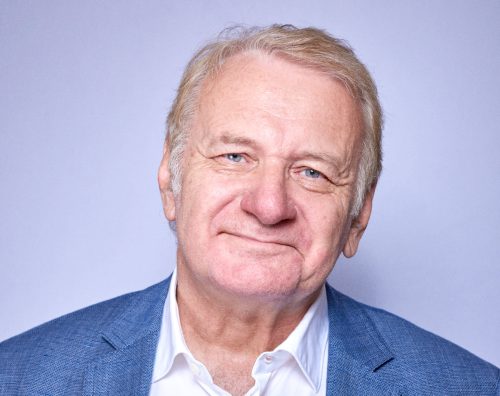
Dr Thierry Marnay

Prodisc® L inventor

1990

1st Prodisc® L at the CCV in Montpellier

2001

1st Prodisc® L in the USA

Dr Thierry Marnay trains American surgeons
2025
The Prodisc® L is the most frequently installed lumbar disc prosthesis globally every year for the last 25 years

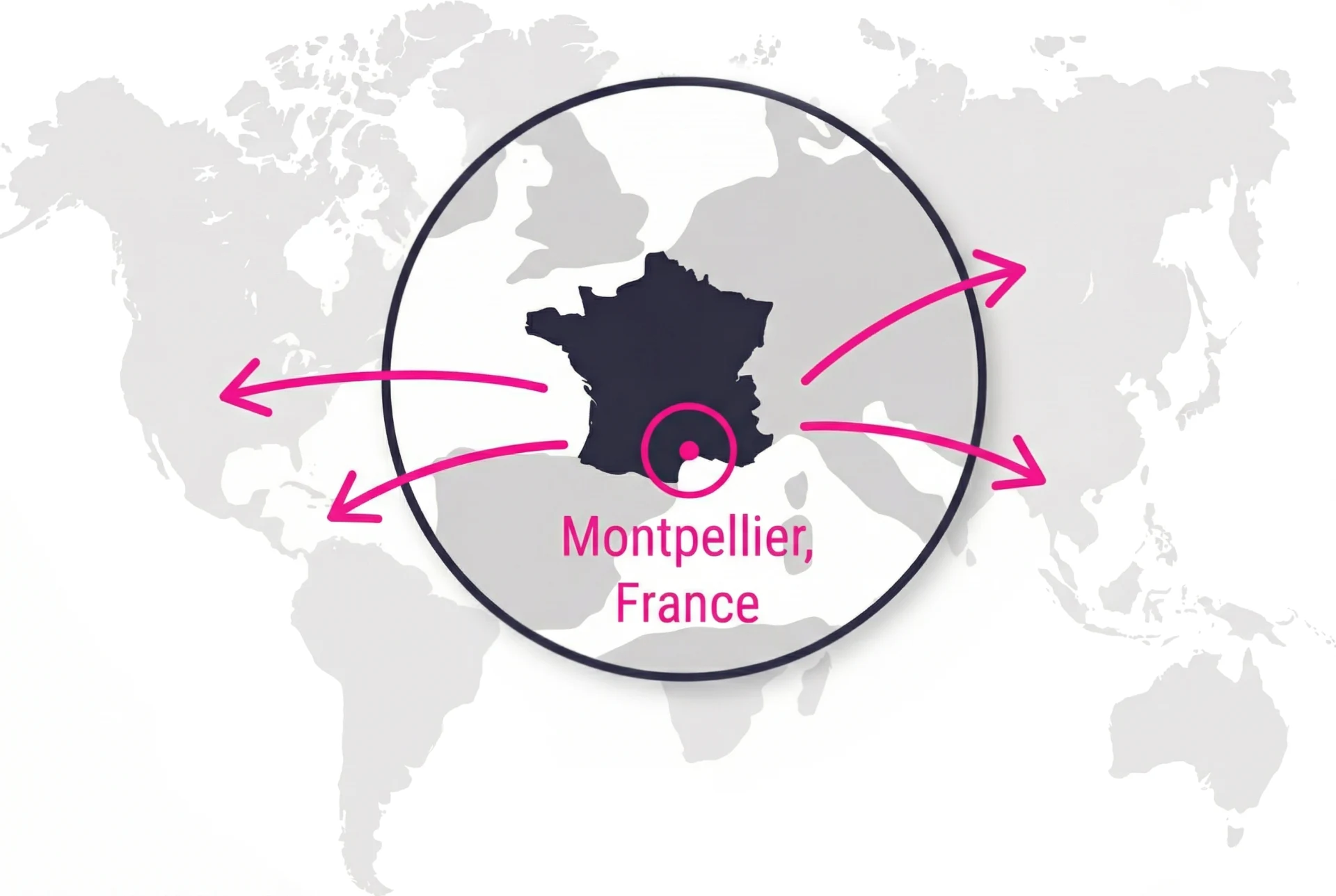
Map showing the location of Montpellier, France, and arrows pointing at continents such as North America and Asia, demonstrating the expansion of the Prodisc-L worldwide

After adoption across Europe in the late 1990s, the Prodisc® L disc replacement then became available globally, following FDA approval in 2006.

Patients who underwent the first disc replacement in the early 1990s at CCV Montpellier are still being monitored and, for the moment, no patient has required a replacement implant.

Consequently, Prodisc® L prosthesis lifespan is considered to be at least 40 years.

Constantly in pain?

Suffering from chronic sciatica or severe lower back pain and have an MRI scan? Submit your surgical assessment to see if Prodisc® L disc replacement surgery is right for you.

Surgical Assessment

Frequently Asked Questions

Why Prodisc® L total lumbar disc replacement?

Prodisc® L is the best treatment for herniated discs caused by degenerative disc disease.

It is the only treatment proven to:

  • Permanently relieve symptoms such as chronic sciatica and severe lower back pain in a single procedure
  • Treat the root cause of your pain by safely replacing your degenerated natural disc(s) with an artificial disc with a lifespan in excess of 40 years
  • Restore spinal mobility, allowing a full return to strenuous activities and sports
  • Provide a swift recovery and a fast return to work
  • Not cause problems in other parts of the spine in later life
Why travel to France for Prodisc® L lumbar disc replacement?

CCV Montpellier is the global gold standard for the procedure, undertaking more than 800 Prodisc® L procedures every year, considerably more than any other clinic.

CCV Montpellier invented Prodisc® L, and their surgeons have performed the procedure for over 35 years - longer than anyone else in the world.

Their published outcomes, including a 0.67% revision rate across more than 1,000 patients followed for up to 21 years[2], provide strong evidence that Prodisc® L total lumbar disc replacement is the best treatment for herniated discs caused by degenerative disc disease.

SpinePro arranges and manages everything, so treatment in France is better and no more complex than treatments available closer to home.

How long do I have to wait for treatment?
Treatment is typically available within 8 weeks for suitable candidates, subject to a successful surgical assessment.
How long does a Prodisc® L lumbar disc implant last?

Patients who received the first Prodisc® L implants at CCV in 1990 are still being monitored, and none has required a replacement implant. The expected lifespan is considered to be at least 40 years.

When can I return to sport after lumbar disc replacement?

Light exercise is usually possible from around 12 weeks. Return to competitive sport is usually between 6 and 12 months, depending on the individual. CCV's long-term data includes patients who have returned to high-impact activities and you can find some stories on our patient testimonials page.

How much does Prodisc® L lumbar disc replacement cost?

Treatment at CCV through SpinePro starts from £32,000, inclusive of surgery, hospital stay, hotel recuperation in Montpellier, personalised nursing care on your return home and all travel expenses.

SpinePro is currently only able to assist patients who are self-funding; we are not able to work with health insurance providers at this time.

Can Prodisc® L disc replacement be done at more than one level?

Yes, up to four levels can be treated in a single procedure. CCV routinely performs two-level disc replacement, and their published outcomes show equivalent results to single-level procedures.

Why is the surgery performed through the abdomen rather than the back?

Intervertebral discs sit at the front of the spinal column, while the spinal nerves run through the spinal canal at the back. By approaching from the front, the surgeon can remove the damaged disc and place a Prodisc® L implant without the need to disturb spinal nerves, which is why the risk of nerve damage from this procedure is very low.

How long will I be off work after lumbar disc replacement?

The procedure is minimally invasive providing a rapid recovery and fast return to work.

The minimum time off work is typically two weeks, though this depends significantly on the nature of your job. Desk-based workers often return within two to four weeks; those in physically demanding roles may need longer. Your surgeon will advise based on your individual recovery progress.

Is lumbar disc replacement safer than spinal fusion?

Neither procedure is risk-free, but Prodisc® L total lumbar disc replacement carries a significantly lower risk than spinal fusion based on a number of factors. Please see our page comparing treatments for more details.

Revision surgery to correct a Prodisc® L procedure undertaken by CCV Montpellier is extremely rare. Complications are less than 1 in 100.[2] The most common complication is haematoma (blood clotting) around the incision which is easily resolved.

Can I have disc replacement if I've already had a discectomy?
In many cases, yes. CCV's published data shows that patients with prior disc surgery achieve equivalent long-term outcomes to those having disc replacement as their first procedure. Submit your MRI via our surgical assessment service and our surgeons will advise whether you're a candidate.

References

  1. Data from follow-up questionnaire of 2,143 patients receiving a disc replacement at CCV Montpellier since 1999
  2. Clinical Outcomes After 1 and 2-Level Lumbar Total Disc Arthroplasty, 1,187 Patients with 7 to 21-Year Follow-up – The Journal of Bone & Joint Surgery, 2024